Scale and spots
White deposits on fixtures and water spots on glass are common reasons homeowners ask about softening.
WATER SOFTENER INSTALLATION & SERVICE
Water softeners for Southington and Connecticut homes.
Spots on the shower glass. Buildup around the faucet. Soap that is hard to rinse away. We help you understand your water and choose a softener sized for your household, with installation and ongoing service.
HIC-0704692 Insured Based in Southington
UNDERSTAND THE PROBLEM
Hardness comes mainly from dissolved calcium and magnesium. These minerals can leave deposits as water dries or is heated. Hardness alone does not mean your water is unsafe.
White deposits on fixtures and water spots on glass are common reasons homeowners ask about softening.
Hardness minerals react with soap, making it harder to form a lather and contributing to residue around sinks and showers.
A properly selected softener helps reduce hardness-related scale, spots, and soap residue. Testing comes before equipment selection.
FROM A FIRST TEST TO ONGOING CARE
We work with new and existing treatment systems, including softeners with Clack WS1 controls. The right system and settings depend on your water and how your household uses it.
We start with your concerns, a basic water test, and a look at the existing equipment and installation space. We explain when additional testing is needed.
We discuss capacity, household demand, plumbing connections, and any companion filtration. You get a quote before deciding on an installation or replacement.
Ask about a softenerAlready have a softener? We can discuss inspections, maintenance, and troubleshooting. Share its make, model, and symptoms so we can plan the next step.
Request system serviceREAL EQUIPMENT. OUR WORK.
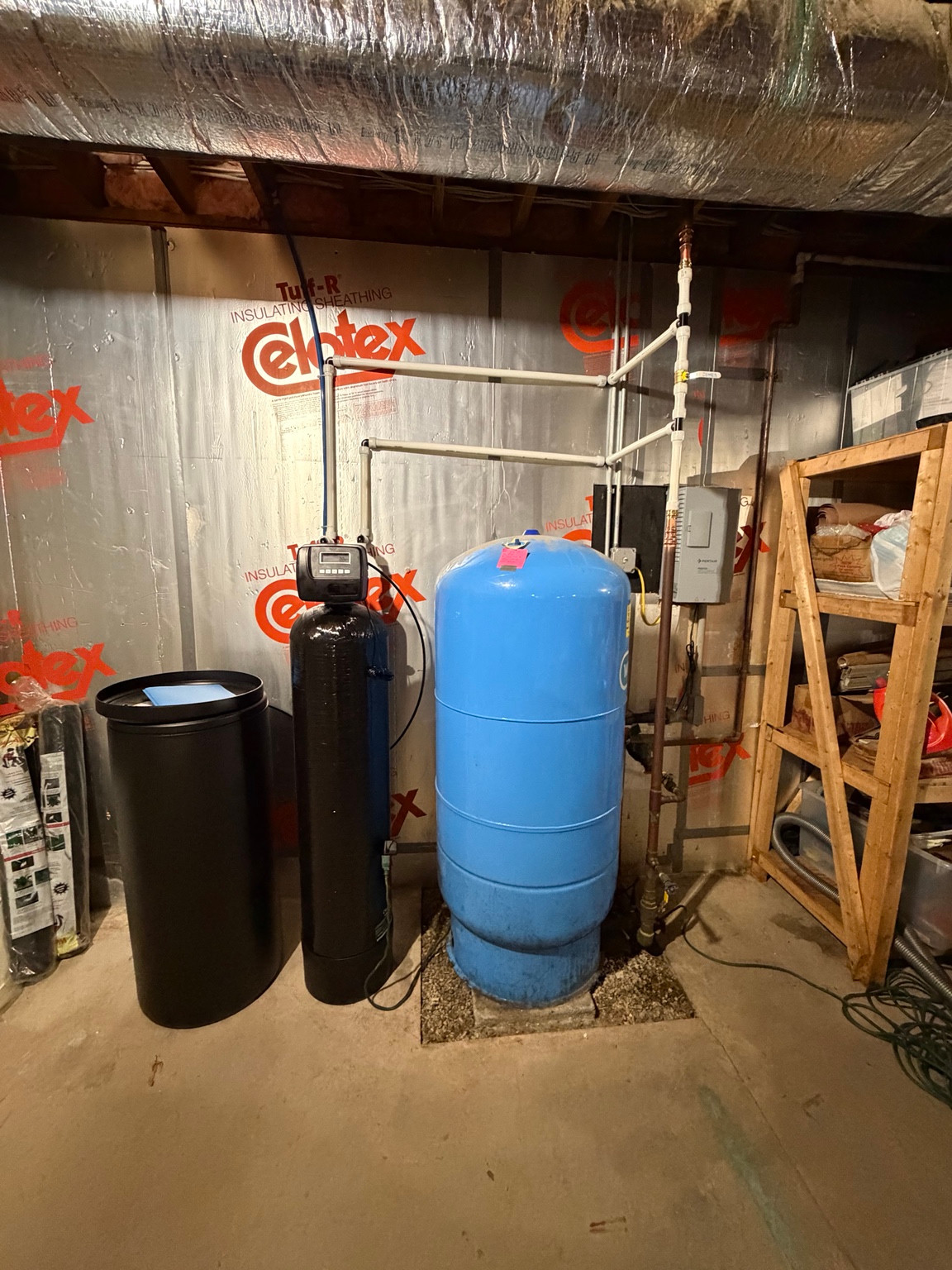
Some homes need softening on its own; others use several types of treatment. These photos show our installation work, not a recommendation that every home needs the same setup.
A 10 × 54 water softener paired with a 10 × 54 whole-house carbon system and a separate brine tank.
KNOW WHAT IS BEING TESTED
We use a basic in-home water test to help discuss hardness and treatment options. It is not a comprehensive laboratory analysis or a guarantee of drinking-water safety. Specific contaminant concerns may require separate testing through an appropriate laboratory.
QUESTIONS WE CAN HELP WITH
Mineral buildup, spots on fixtures, and soap residue can be clues, but they do not measure hardness. A water test helps establish hardness and whether softening makes sense. We also consider your water source, household use, and any existing treatment before recommending equipment.
Yes, we work with both municipal water and private wells. Neither source automatically means you need a softener. For well water, concerns such as iron, manganese, odor, or bacteria may call for additional testing and separate treatment. We select the approach for your actual water conditions.
Our free basic in-home water test is a starting point for understanding hardness and discussing treatment options. It is not a comprehensive laboratory analysis or a guarantee that drinking water is free of contaminants. If you have a specific contaminant or safety concern, tell us before the visit so we can discuss appropriate separate laboratory testing.
No. A softener addresses hardness minerals. Carbon and cartridge filters are selected for specific concerns, such as taste, odor, or sediment. UV is used for microbial treatment, and reverse osmosis is a separate drinking-water option. A softener does not disinfect water or remove every contaminant; some homes need a combination of treatments.
A conventional softener uses resin to exchange hardness minerals for sodium or potassium ions. Salt makes the brine used during regeneration to restore the resin’s capacity. The brine tank needs replenishing as directed, and settings, operation, and maintenance should follow the equipment instructions. Usage and service needs depend on the system and your water.
Contact us with the make and model, any display message, and what has changed, such as hard water returning or unusual salt use. A photo of the equipment helps us discuss service and troubleshooting. We will assess the system before recommending repair, maintenance, or replacement.
A quote depends on measured hardness, household demand, equipment selection, existing plumbing, access, and any additional treatment needed. We discuss the options and provide a quote before you decide. We do not use a one-size-fits-all price for every home.
LOCAL TO SOUTHINGTON
We serve Southington and nearby communities including Berlin, Bristol, Cheshire, Farmington, Meriden, New Britain, Plainville, Waterbury, and Wolcott, with service available throughout Connecticut. Tell us your town and whether your home uses a private well or municipal water.
See where we workLET’S TALK ABOUT YOUR WATER
Request a water test, ask about a new softener, or tell us what your current system is doing. We will follow up to discuss your needs and confirm scheduling.
Learn more about water hardness from USGS and home water treatment from CDC.